
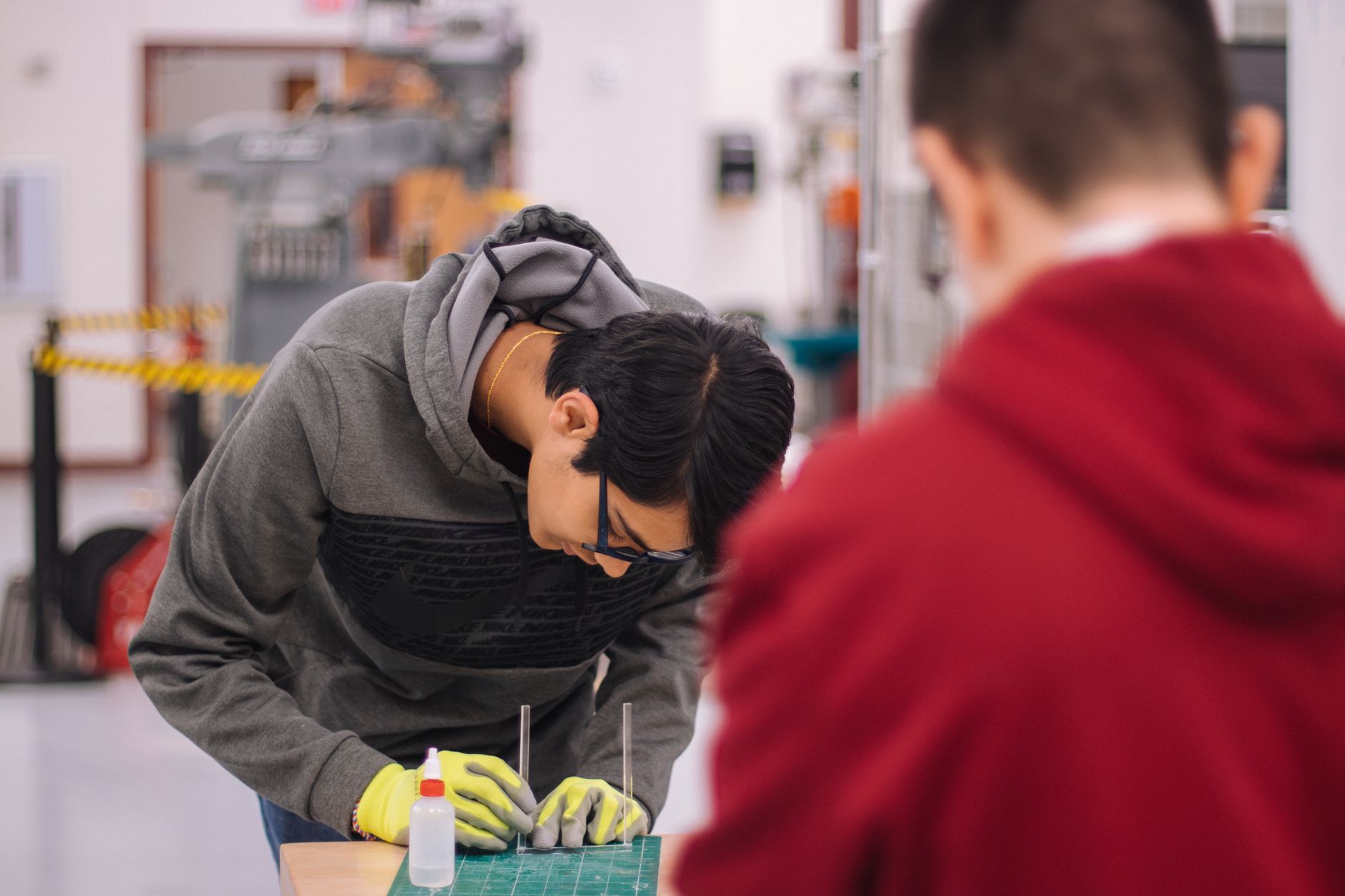
For decades, the UK has pushed education in one direction: more academic, more digital, more exam-heavy, more classroom-based. We told ourselves this was “modernisation”. We told young people that practical skills were old-fashioned. We told parents that university was the only real path to success.
But what if we were wrong?
What if the future doesn’t need more academic pressure — but less? What if rolling back the education system is actually the way forward? And what if the old hands-on, dyslexia-friendly, apprenticeship-based model wasn’t outdated at all — but exactly what today’s children need, especially those with ADHD?
🌱 The Problem We Created Without Realising
The modern education system is built around:
- long periods of sitting
- heavy writing loads
- abstract tasks
- constant self-management
- high-stakes exams
- minimal movement
- minimal practical work
This is the worst possible environment for ADHD, dyslexia, dyspraxia, autism, and anxiety. It’s also not great for many neurotypical learners either.
We’ve created a system that rewards one cognitive profile — the highly organised, highly verbal, highly academic child — and quietly punishes everyone else.
🔄 What “Rolling Back” Really Means
Rolling back the education system doesn’t mean going back to chalkboards and corporal punishment. It means returning to the parts that worked:
- hands-on learning
- multi-sensory teaching
- apprenticeships
- practical subjects
- mentorship
- movement
- real-world problem solving
These weren’t old-fashioned. They were human.
And they supported neurodivergent learners far better than today’s system.
🧠 Why Dyslexia-Friendly Teaching Helps ADHD
Dyslexia-friendly teaching focuses on:
- visual supports
- chunked tasks
- clear instructions
- multi-sensory learning
- predictable routines
These are exactly the same supports recommended for ADHD under workplace guidance and the Equality Act.
Designing for dyslexia accidentally designs for ADHD too. It’s universal design — and it works.
🔧 Why Hands-On Learning Is ADHD’s Natural Habitat
ADHD brains thrive when learning is:
- physical
- practical
- sensory
- movement-based
- immediate
- visible
This is why ADHD children often excel in:
- engineering clubs
- Scouts
- robotics
- cooking
- mechanics
- carpentry
- drama
- outdoor learning
Hands-on learning provides the external structure that ADHD brains struggle to generate internally.
🧱 What We Lost When We Removed Practical Subjects
Our parents’ generation had:
- woodwork
- metalwork
- textiles
- design & technology
- mechanics
- horticulture
- vocational colleges
- apprenticeships
These subjects weren’t “extras”. They were core developmental pathways.
They built:
- procedural memory
- craftsmanship
- confidence
- teamwork
- resilience
- attention regulation
When we removed them, we didn’t just lose skills — we lost the environments where neurodivergent learners thrive.
🇬🇧 The UK’s Industrial De‑Revolution Made ADHD More Visible
As the UK moved from manufacturing → services, the education system followed. We pushed everyone toward:
- GCSEs
- A‑levels
- university
- office work
- retail
- digital jobs
But many young people — especially neurodivergent ones — are cognitively wired for hands-on mastery, not endless academic abstraction.
The result?
- rising ADHD diagnoses
- rising dyslexia diagnoses
- rising anxiety
- rising school refusal
- rising tribunal cases
- rising workplace adjustments
The system changed. The brains didn’t.
🔧 What Rolling Back Could Look Like
A modernised “rolled-back” education system would include:
✔️ Multi-sensory teaching
Not just reading and writing — but doing, touching, building, moving.
✔️ Apprenticeship pathways from age 14+
Not as a “fallback”, but as a respected, equal route.
✔️ More vocational subjects
Engineering, mechanics, robotics, textiles, carpentry, electronics, horticulture.
✔️ Visual timetables and clear routines
Supports dyslexia, ADHD, autism, and anxiety.
✔️ Movement built into lessons
Short bursts, rotations, outdoor learning.
✔️ Assessment variety
Projects, portfolios, practical demonstrations — not just exams.
✔️ Mentorship instead of pure self-management
The model that supported our parents’ generation.
🌟 Final Thought
Rolling back the education system isn’t about going backwards. It’s about returning to what worked — and updating it for today.
Hands-on learning isn’t old-fashioned. Dyslexia-friendly teaching isn’t niche. Apprenticeships aren’t second-class.
They’re the foundation of a system that supports all learners — especially those who don’t fit neatly into the academic mould.
If we want an education system that works for the future, we might need to rediscover the past.