
For years we’ve been told that the future is academic, digital, and desk‑based. But what if the way we teach — and the way we expect young people to learn — is actually working against a huge portion of the population?
Dyslexia diagnoses are rising. ADHD diagnoses are rising. Autism diagnoses are rising. And yet the education system hasn’t fundamentally changed since the 1980s.
Maybe the problem isn’t the children. Maybe the problem is the system.
🌱 The Big Question
If our education system became dyslexia‑friendly and hands-on, would it support ADHD better?
The evidence — from neuroscience, classroom studies, and generational experience — says yes.
Not just a little. Transformationally.
🧠 Why Dyslexia-Friendly Teaching Helps ADHD Too
Dyslexia-friendly teaching isn’t just about reading. It’s about how information is delivered:
- clear instructions
- visual supports
- chunked tasks
- multi-sensory learning
- predictable routines
- practical demonstrations
These are exactly the same supports recommended for ADHD under the Equality Act.
When you design for dyslexia, you accidentally design for ADHD, autism, dyspraxia, and anxiety too. It’s universal design — and it works.
🔧 Why Hands-On Learning Is ADHD’s Natural Habitat
ADHD brains thrive when learning is:
- physical
- practical
- sensory
- movement-based
- immediate
- visible
This is why ADHD children often excel in:
- engineering clubs
- Scouts
- coding workshops
- carpentry
- mechanics
- cooking
- drama
- sports
- robotics
- outdoor learning
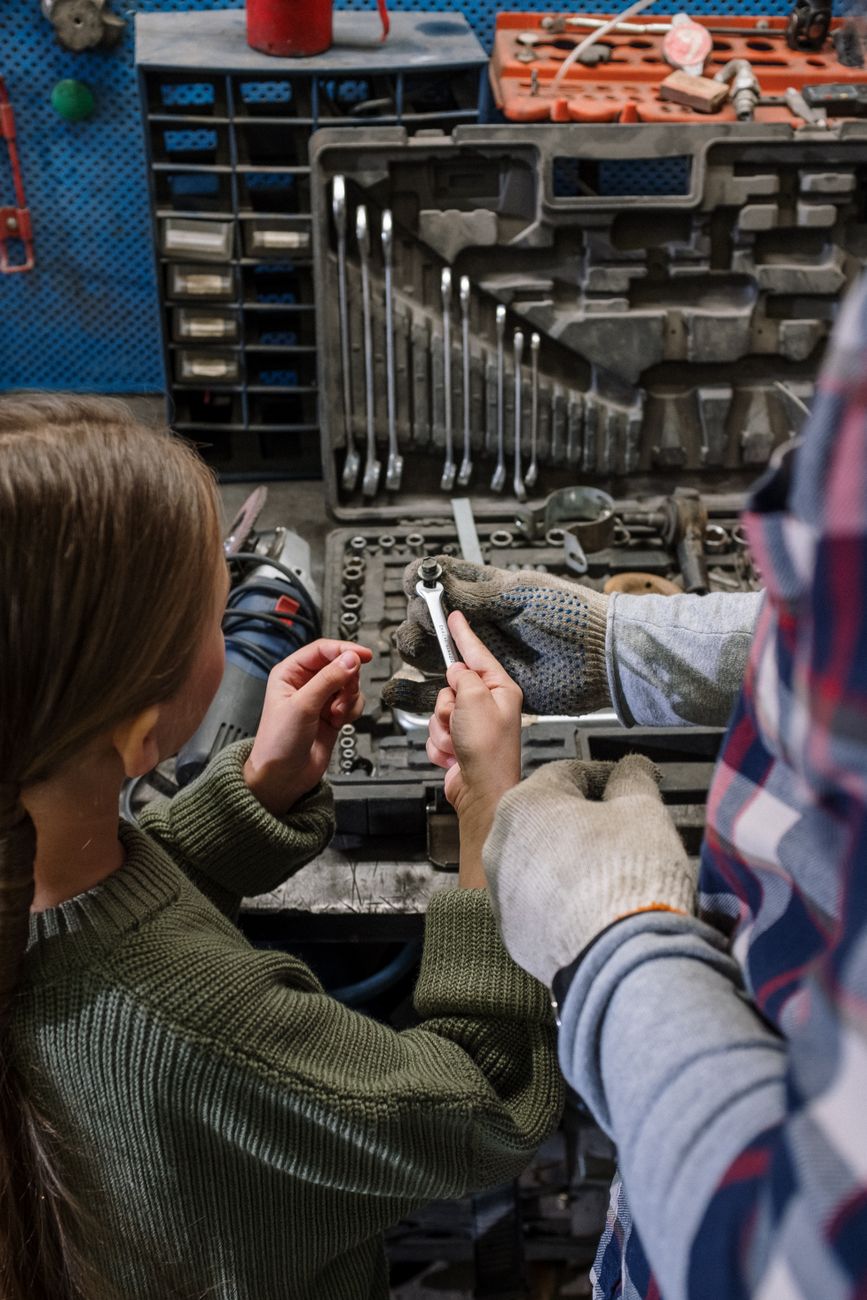
Hands-on learning provides the external structure that ADHD brains struggle to generate internally.
It’s not “dumbing down”. It’s teaching in the way the brain actually works.
🏫 What’s Wrong With the Current System?
The modern UK education system is built around:
- long periods of sitting
- abstract tasks
- heavy writing loads
- delayed rewards
- constant self-management
- high-stakes exams
- minimal movement
- minimal practical work
This is the worst possible environment for ADHD and dyslexia.
It’s like asking a sprinter to run a marathon every day.
🧱 What We Lost When We Removed Hands-On Learning
Our parents’ generation had:
- woodwork
- metalwork
- textiles
- design & technology
- mechanics
- apprenticeships
- vocational colleges
- practical science
- outdoor learning
These subjects weren’t “extras”. They were core developmental pathways.
They built:
- procedural memory
- craftsmanship
- problem-solving
- confidence
- teamwork
- resilience
- attention regulation
When we removed them, we didn’t just lose skills — we lost the environments where neurodivergent learners thrive.
🇬🇧 The UK’s Industrial De‑Revolution Made ADHD More Visible
As the UK moved from manufacturing to services, the education system followed. We pushed everyone toward:
- GCSEs
- A‑levels
- university
- office work
- retail
- digital jobs
But many young people — especially neurodivergent ones — are cognitively wired for hands-on mastery, not endless academic abstraction.
The result?
- rising ADHD diagnoses
- rising dyslexia diagnoses
- rising anxiety
- rising school refusal
- rising tribunal cases
- rising workplace adjustments
The system changed. The brains didn’t.
🌍 Other Countries Are Seeing the Same Pattern
Japan — famous for micro‑precision workshops — is losing its craft base because young people are pushed into academic routes. Germany is fighting to protect its apprenticeship system. Finland is reintroducing hands-on learning after academic overload caused burnout.
The world is rediscovering something our grandparents already knew:
Hands-on learning isn’t old-fashioned. It’s human.
🔧 So What Would a Better System Look Like?
A dyslexia-friendly, ADHD-supportive education system would include:
✔️ Multi-sensory teaching
Not just reading and writing — but doing, touching, building, moving.
✔️ Apprenticeship pathways from age 14+
Not as a “fallback”, but as a respected, equal route.
✔️ More vocational subjects
Engineering, mechanics, robotics, textiles, carpentry, electronics, horticulture.
✔️ Visual timetables and clear routines
Supports dyslexia, ADHD, autism, and anxiety.
✔️ Movement built into lessons
Short bursts, rotations, outdoor learning.
✔️ Assessment variety
Projects, portfolios, practical demonstrations — not just exams.
✔️ Mentorship instead of pure self-management
The model that supported our parents’ generation.
🌟 Final Thought
If we redesigned education to be dyslexia-friendly and hands-on, we wouldn’t just help ADHD learners — we’d help everyone. We’d rebuild confidence, rebuild skills, and rebuild the pathways that once made the UK a world leader in craft, engineering, and innovation.
The future doesn’t have to be more academic. It can be more human.