
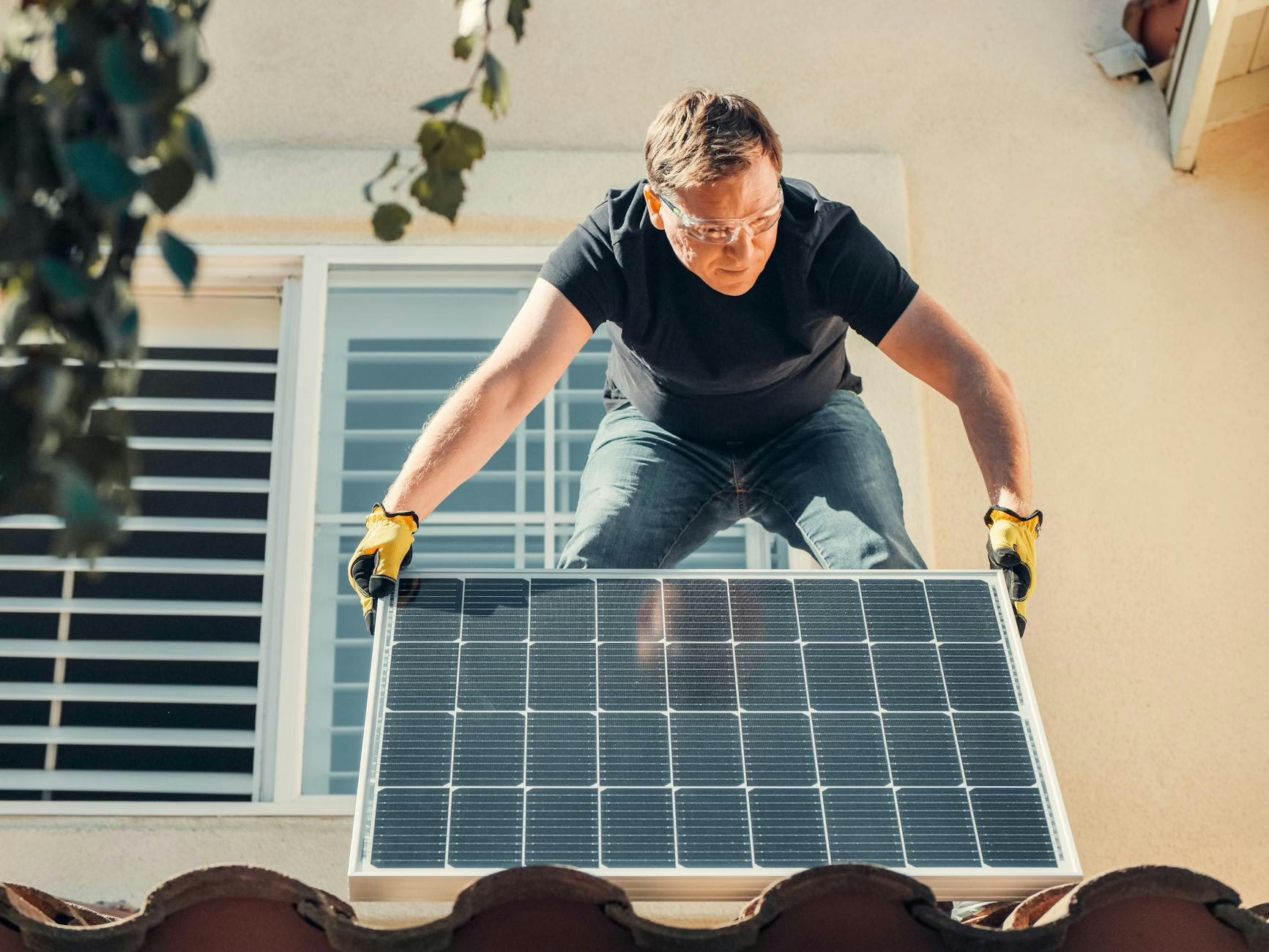
Plug‑in solar is finally coming to the UK — and it could save families hundreds of pounds over the next decade. With Government approval now confirmed for 2026, households will soon be able to install simple, DIY solar kits without scaffolding, installers or planning permission.
This updated guide explains what plug‑in solar is, when it becomes legal, how much it costs, expected savings, G98/G99 rules, and the best systems arriving in the UK this summer.
What Is Plug‑In Solar?
Plug‑in solar (also called balcony solar or plug‑and‑play solar) is a compact microgeneration kit designed for renters, homeowners and anyone without a suitable roof.
A typical kit includes:
- 1–2 solar panels (400–450W each)
- A microinverter
- A cable with a standard UK 3‑pin plug
You simply place the panels on a balcony, shed roof, patio or garden frame and plug them into a socket. The system feeds clean electricity directly into your home — no installer, no roof work, no paperwork.
If you want to expand this section later, tap plug‑in solar basics.
When Will Plug‑In Solar Be Legal in the UK?
The Government has now set a clear timeline:
| Date | What Happens |
|---|---|
| 16 March 2026 | Government confirms plug‑in solar will be legalised |
| 15 April 2026 | Wiring rules updated (BS 7671 Amendment 4) |
| July 2026 (expected) | BSI publishes product standards — plug‑in solar becomes legal |
| October 2026 | Transition period ends; full compliance required |
Retailers including EcoFlow, Lidl and Amazon are already preparing UK‑compliant kits for summer 2026.
For deeper detail, tap UK approval timeline.
How Much Will Plug‑In Solar Cost?
Based on European pricing, UK kits are expected to launch at:
- £400–£500 for a complete 800W system
- Optional battery modules available at extra cost
This makes plug‑in solar one of the cheapest renewable upgrades available to UK households.
Expected Savings for a Typical UK Household
Plug‑in solar won’t power your whole home, but it will offset your daytime baseload — fridge, router, laptop, chargers and standby devices.
Typical savings:
- £70–£110 per year
- Payback period: ~4 years on a £400 kit
- Lifespan: ~15 years (a decade of net savings)
For renters or families without a south‑facing roof, this is a game‑changer.
If you want a personalised calculation, tap solar savings estimate.
Best Plug‑In Solar Systems (Expected UK Models)
Systems already sold in Europe and expected in the UK:
- EcoFlow Balcony Solar — premium microinverters, strong build, optional battery storage
- Ikea/Svea Solar Kit — popular budget option with two 450W panels
- Lidl Plug‑In Solar — low‑cost, mass‑market system
Upcoming UK‑specific models:
- EcoFlow
- Anker
- Jackery
- Allpowers
- UK startups developing foldable renter‑friendly kits
Expect a wave of new products once the BSI standard is published.
Can You Add Plug‑In Solar If You Already Have Rooftop Solar?
Yes — in most cases.
Plug‑in solar simply offsets your home’s consumption through a socket, so it can run alongside rooftop solar. However, your total generation capacity matters:
- If your rooftop inverter is 3.6kW, adding an 800W plug‑in kit takes you to 4.4kW, which may trigger G99 rules.
- Most homes with a 3.6kW system will still be fine under G98 if the plug‑in kit is small enough.
For help checking your setup, tap G98/G99 guidance.
Do You Need G98 or G99 Approval?
This is one of the most common questions.
G98 (most plug‑in systems)
- Applies to systems ≤3.68kW per phase
- Install first, notify within 28 days
- No pre‑approval required
G99 (larger or combined systems)
- Applies to systems >3.68kW
- Requires pre‑approval from your DNO
- Longer approval times
Where plug‑in solar fits:
- A typical 800W kit falls under G98
- If you already have rooftop solar, check your combined capacity
Should You Buy Now or Wait?
Right now, the best advice is simple:
Wait until July 2026.
Until the BSI standard is published, plug‑in solar is not fully compliant, and insurers may not cover it. Once approved, UK‑certified kits will be safe, legal and widely available.
FAQ: Plug‑In Solar in the UK (2026)
- Are plug‑in solar panels legal? Not yet — but they will be once the BSI standard arrives in summer 2026.
- How much can they save? £70–£110 per year depending on usage and tariff.
- Do I need an electrician? No — plug‑in solar is designed for DIY installation.
- Can renters use them? Yes. No roof access or permanent fixtures required.
- Do they work with rooftop solar? Usually yes — just check your total generation capacity.
- Do they work on cloudy days? Yes, though output is lower.
- Do they work during a power cut? No — they shut down automatically for safety.
- Can I export excess energy? Not initially. Early UK kits are self‑consumption only.